News
Programme
Contacts
The city, the lodges, the sea and the valley
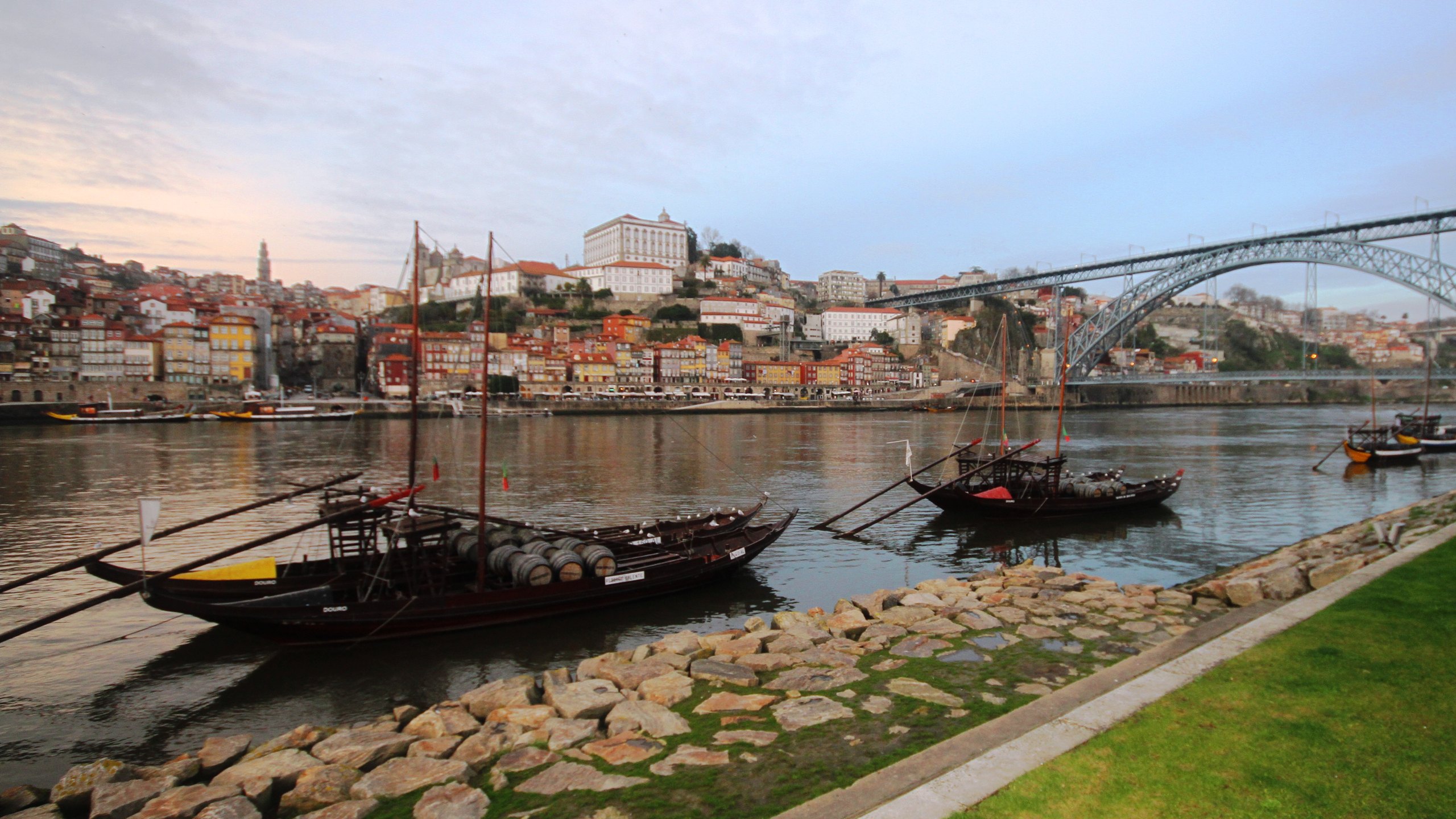
Porto stands on steep granite cliffs at the mouth of the Douro, with a World Heritage centre that is small and walkable (but steep!). Across the river lie the port lodges of Gaia, 20 minutes west is the Atlantic at Foz and Matosinhos, and an hour east the Douro valley begins.
Porto
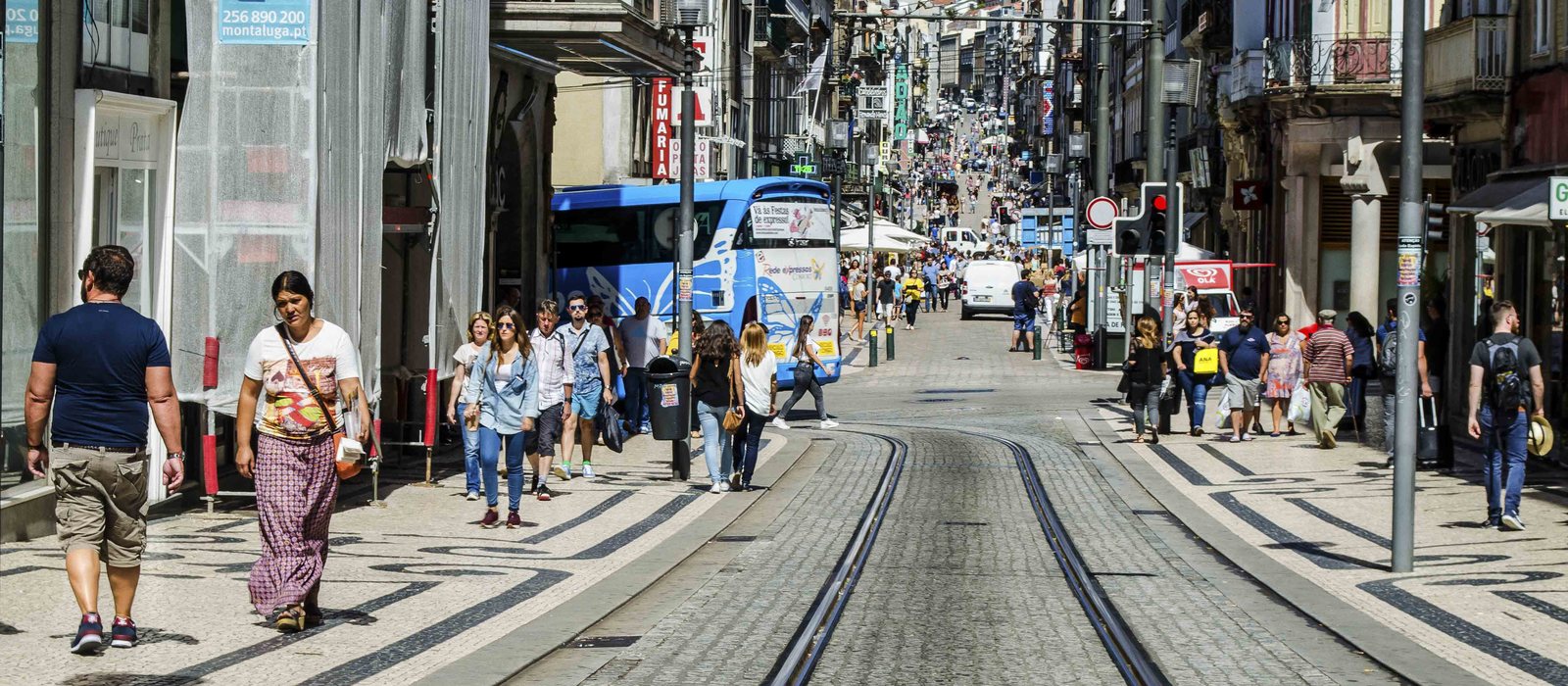
Ribeira, Sé, Baixa/Aliados, Clérigos, Bolhão and Bonfim: bridges, tiles, bookshops, taverns and rooftop bars — all within walking distance, up and down the hills.
Vila Nova de Gaia
The port lodges, the WOW museums and the view of Porto from Jardim do Morro. Over the bridge on foot in 10 minutes or by metro D in 2.
Foz & Matosinhos
Seafront promenades, the Foz lighthouse, the grilled fish of Matosinhos and Álvaro Siza's tidal pools. Tram 1 along the river or metro A, 20–25 minutes.
Douro
World Heritage vineyard terraces, estates with tastings and boat trips on the river. Train from São Bento to Pinhão in 2.5 h, or an organised day trip.
The map follows your search. Click a dot to see more, open the place in Google Maps or get directions.
From sardine tins to Claus Porto
Porto is a good shopping city at fair prices: Rua de Santa Catarina for the chains, Rua das Flores for design and gifts, Bolhão for food, and the malls open every day. Click a place to see it on the map or open it straight in Google Maps.
Eat like a tripeiro
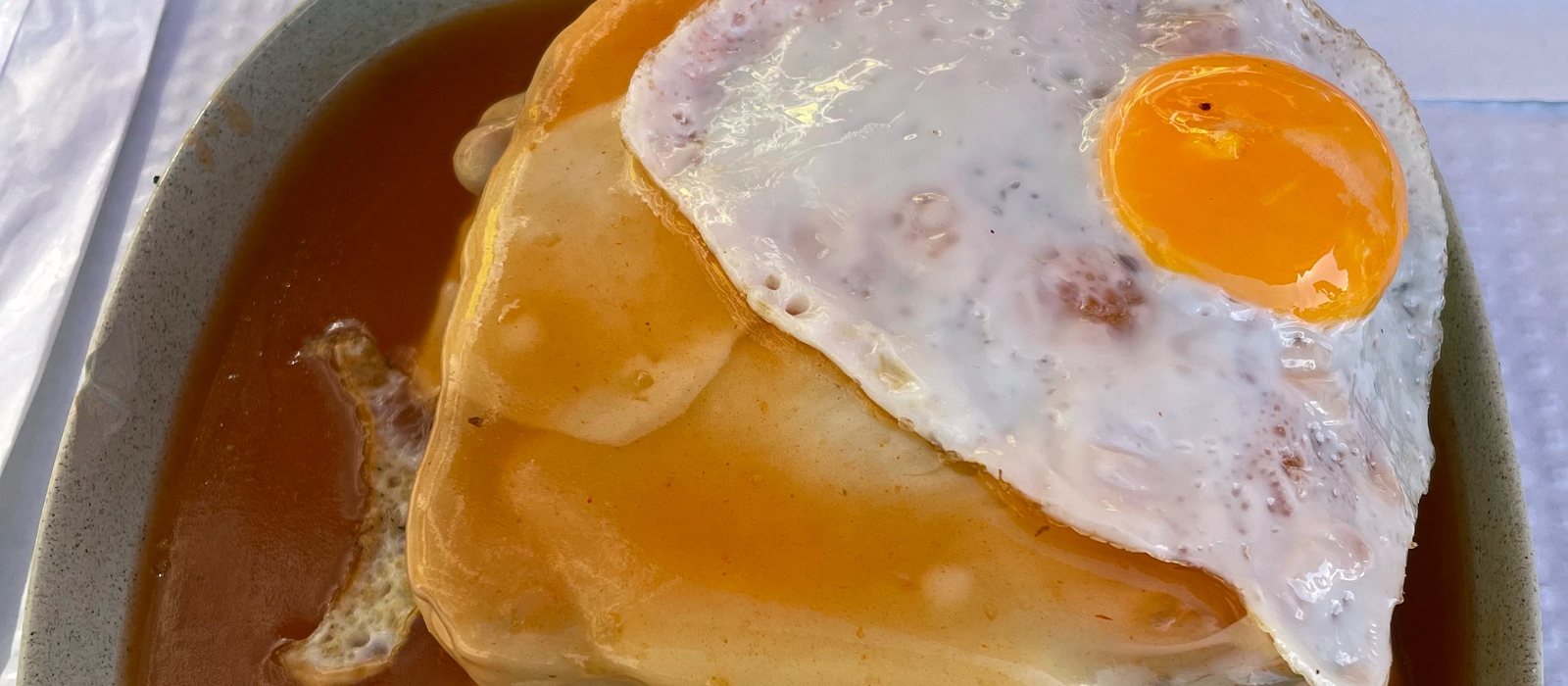
Francesinha, tripas, salt cod, grilled fish in Matosinhos and the pernil sandwich at Casa Guedes. Here you'll find both taverns where the dish of the day costs ten euros and ten Michelin-starred restaurants within 20 minutes.
Good to know about food and drink
- Prices 2026: a dish of the day (prato do dia) at a traditional tavern costs about €8–12 at lunch, and dinner with a glass of wine at a simple place about €15–25 a head. A francesinha is usually €10–14.
- At smarter places on the Ribeira and in Gaia prices are often double; tasting menus at Michelin restaurants run €120–250 a head without wine.
- A coffee (café, or 'cimbalino' as Porto says) and a pastel de nata together cost about €2–3 in an ordinary café.
- A half portion (meia dose) is on the menu at most traditional places and is often enough for one – Portuguese portions are big.
- Bread, olives and butter brought unasked (couvert) cost €1–4 a head; say 'não, obrigado' if you don't want it and it is taken away without fuss.
- Tipping is not obligatory; locals leave coins or round up. In restaurants 5–10% is generous. Tips cannot be added on card terminals – leave cash.
- Lunch is 12:30–14:30 and dinner from 20:00; many kitchens close between 15:00 and 19:00. At popular places a booking is essential at weekends.
- Tripas à moda do Porto (tripe with white beans and sausages) is the city's signature dish and the reason Porto people are nicknamed 'tripeiros'. Traditional taverns usually serve it on Thursdays.
- Bacalhau (salt cod) is on every menu: à Gomes de Sá (with potatoes, onion and eggs – a Porto invention), à Brás, com broa (with a cornbread crust) and as fritters (pastéis de bacalhau).
- Vinho verde ('green wine') comes from the Minho north of Porto – a light, refreshing white that goes with fish. The Douro valley east of the city gives big reds and port itself.
- Port is drunk before and after the meal: white port and tonic (porto tónico) is the city's aperitif, tawny or vintage with dessert.
- Sundays and Mondays are the weak days: Bolhão market is closed on Sundays and many taverns close one or the other. Time Out Market in São Bento and the restaurants on the Ribeira and in Gaia are open every day.
- Many small cafés and taverns take only Portuguese Multibanco cards or cash for amounts under €5–10; international cards work wherever there is a terminal with the Visa/Mastercard logo.
- For groups (10+): book by email a week or more ahead and ask for a set menu (menu de grupo); most larger places offer a three-course menu at €25–45 a head including drinks.
- Matosinhos is Porto's fishing town – it is where locals go for grilled fish on Sundays. Metro line A from Trindade takes about 25 minutes.
Saúde!
Afternoons are for the port lodges in Gaia, the evening starts late with a white port and tonic, and the night belongs to Galeria de Paris. Coffee is called cimbalino.
Good to know about nightlife and port
- The evening starts late: dinner around 21:00, a first drink in a bar around 23:00 and clubs don't get going until after 01:00. Bars usually close at 02:00, clubs at 06:00.
- Nightlife is concentrated on two parallel streets above Clérigos – Rua da Galeria de Paris and Rua de Cândido dos Reis – where the crowd stands in the street between the bars from Thursday to Saturday.
- Most port lodges in Gaia close at 18:00–19:00; tasting is an afternoon activity, not an evening one. Rooftop bars on the Gaia quay (Espaço Porto Cruz) stay open into the evening.
- White port and tonic (porto tónico) is the city's aperitif at €5–8; beer comes in small glasses (fino, 20 cl) for about €1.50–2.50 in taverns.
- Fado is a Lisbon tradition; in Porto it is performed in a few places only, mainly Casa da Guitarra (short concerts), Casa da Mariquinhas and O Fado (dinner) and in the Cálem cellar in Gaia. Book ahead.
- In summer and around São João (23–24 June) the Ribeira and the Gaia quay fill with people until morning; the whole city becomes one party with plastic hammers, garlic flowers and fireworks over the river.
- Many cafés double as bars and vice versa – at the old places you order at the counter and pay when you leave.
- Drinks are cheaper than in Iceland: a glass of wine in a bar €3–5, a cocktail €8–12, a beer €2–4. Prices on the Ribeira and the Gaia quay are the highest.
- Smoking is banned indoors but common on terraces. The minimum age to buy alcohol is 18.
- The last metro runs at about 01:00; after that it is taxis and Uber/Bolt (a ride within the centre €6–10). Night bus 3M serves the airport once the metro has closed.
- University students in black capes (trajes) are part of the street scene; the student festival Queima das Fitas in May is the biggest party week of the year, with concerts in the Queimódromo park.
Six bridges, a thousand tiles
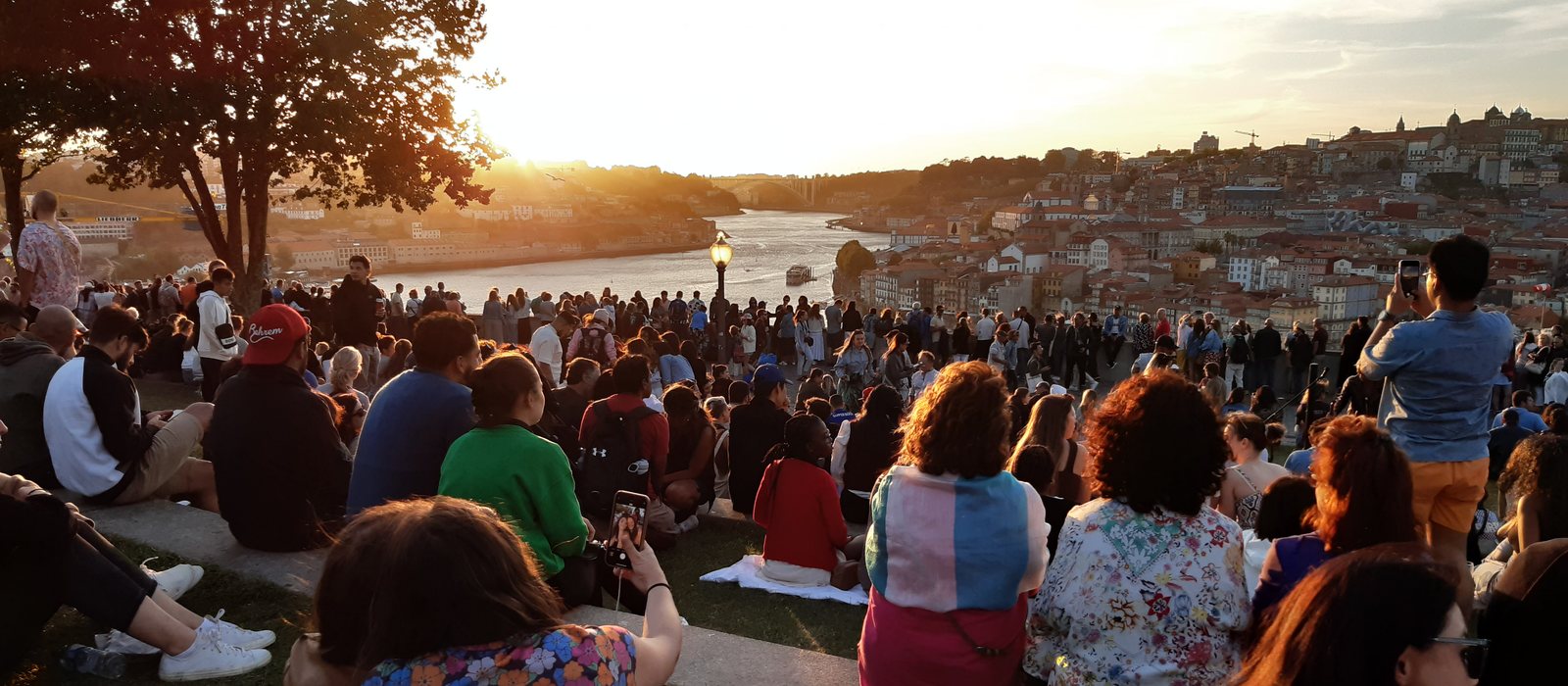
The Clérigos tower, Lello, the Ribeira, the upper deck of the bridge at sunset, Serralves and Casa da Música — with the Douro valley, Guimarães and Braga a train ride away.
What's on?
The Porto year in a nutshell — sorted from today, so what's coming up next is shown first.
Dates shift from year to year. Check the event's website before you book your trip.
Treat yourself
The city's best spas are in the big hotels — The Yeatman with vinotherapy and views, the Sheraton and Porto Palácio in Boavista — and most welcome non-residents. Book treatments a few days ahead.
Where to stay?
The neighbourhood matters more than the stars: the Baixa is flat and central, the Ribeira prettiest but steep, Gaia has the view, Boavista the big group hotels and Foz the sea.
The neighbourhoods and the prices
- Porto's tourist tax is €3 per person per night (since December 2024), capped at 7 nights (€21). Children aged 12 and under are exempt. It is paid at the hotel and often not included in the quoted rate. Vila Nova de Gaia and Matosinhos are separate municipalities with their own rules – ask the hotel.
- The neighbourhood matters: Baixa/Aliados and Rua das Flores are central and flatter; the Ribeira is the prettiest but steep and noisy at night; Boavista has the big conference hotels (10 min by metro); the Gaia hillside has the view but a climb; Foz has the sea but is 15–20 min from the centre.
- For a group of 50–200 the big Boavista hotels (Sheraton 266 rooms, Crowne Plaza 232, Porto Palácio 251, HF Ipanema Park 281) and Vila Galé Porto (292) are the realistic options; in the centre few hotels have more than 100 rooms (InterContinental 105, Pestana Vintage 109, NH Batalha 107, Carrís Ribeira 159).
- Hotel prices in Porto have risen sharply: a four-star room in the centre costs €120–220 a night in May–October 2026, five stars €250–500; November–March is 30–50% cheaper. Festivals (São João, Primavera Sound, Easter) fill the city.
- Check-in is usually at 15:00 and check-out at 11:00–12:00; most hotels store luggage for free. Breakfast is often not included in the cheapest online rates.
- Porto is a World Heritage city of narrow, steep streets; coaches cannot enter the Ribeira or parts of the Baixa. Groups travelling by coach should pick a hotel with coach access (Boavista, Gaia, the Campanhã area) or plan to walk from a drop-off point.
- Air conditioning is standard in hotels but not in apartments; it can reach 35°C in July–August and be damp and chilly in January (old houses are cold).
- Apartments (Airbnb, 'alojamento local') are very numerous in the centre, but the city has restricted new licences; for a group a hotel with a reception is the more reliable option.
What you need to know
Flights, transport, the Andante card, money, safety and everything else — verified as far as possible in autumn 2026. Where something could not be confirmed, the text says so.